

Corporate HR leaders invest in wellness programming for one reason: impact. Attendance numbers matter, but engagement and measurable confidence shifts matter more.
An effective corporate nutrition workshop does not just share information. It increases clarity, builds trust, and gives employees practical tools they feel confident using.
In my most recent workshop, nutrition clarity scores increased from 3.7 to 4.3 out of 5. Every single respondent rated themselves a 4 or 5 after the session. That shift reflects more than satisfaction. It reflects confidence around what actually matters in nutrition.
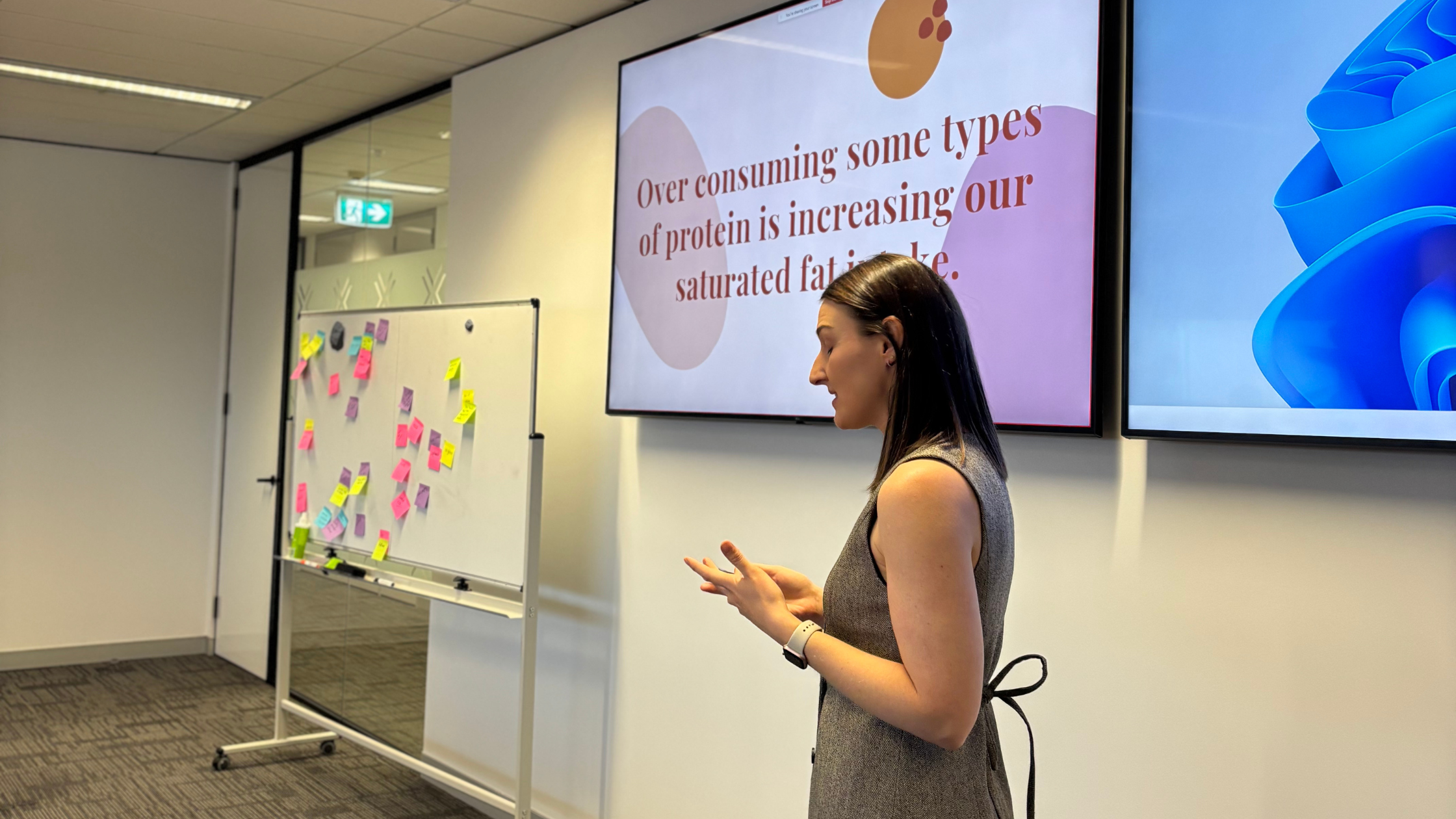
This is what happens inside a corporate nutrition workshop that produces that result.
What Corporate HR Teams Actually Want From a Nutrition Workshop
Corporate decision makers are not hiring a speaker to entertain a room for sixty minutes. They are hiring someone to:
- Reduce employee confusion around nutrition trends
- Increase confidence in everyday food decisions
- Support long term health behaviors
- Encourage participation without shame
- Create measurable improvement in understanding
Employees already receive more nutrition information than they can process. Social media, podcasts, influencers, and headlines compete for attention daily. What they lack is clarity.
A strong corporate nutrition workshop reduces noise rather than adding to it.
The Structural Decision That Changes Everything: Dedicated Q&A Time
Every corporate nutrition workshop I deliver includes a full 30 minutes reserved for Q&A after the formal presentation.
This is not optional filler time. It is intentional design.
When employees know there is protected time for questions, the entire energy of the room changes. They listen differently because they know they will have space to process and clarify.
Without that protected time, employees default to passive listening. With it, they shift into active participation.
For HR teams, this design accomplishes several things:
- It increases perceived value of the session
- It improves post-session survey scores
- It allows individual concerns to be addressed publicly
- It creates psychological safety around food conversations
The real workshop begins when the slides end.
Anticipating the Predictable Questions
Corporate audiences are diverse, but the questions are remarkably consistent. In nearly every workshop, employees ask about:
- Carnivore diet
- Keto diet
- Supplements
- Kids and family nutrition
- Intermittent fasting
- Protein intake
This predictability is an advantage. It allows facilitation to be proactive rather than reactive.
Instead of waiting for these topics to surface, I build structured space within the presentation to acknowledge them. I explain:
- Why these approaches are appealing
- What evidence currently supports
- Where risks and limitations exist
- How to evaluate similar trends independently
Addressing controversial topics directly increases trust. Avoiding them decreases credibility.
For HR teams concerned about polarising discussions, the key is tone. The goal is not to endorse or dismiss. The goal is to contextualise for the individual.

Teaching Frameworks Instead of Food Rules
Corporate nutrition education often fails because it focuses on prescriptive food lists. Employees leave with a handout of what to eat and what to avoid, but no durable understanding.
In contrast, a framework-based workshop teaches employees how to filter new information on their own.
Instead of telling them what to eliminate, I teach:
- What drives the majority of long term health outcomes
- Which behaviors matter most across populations
- How to prioritise consistency over perfection
- How to evaluate a new diet trend in under five minutes
When employees understand how to think about nutrition rather than what to copy, clarity increases.
The measurable shift from 3.7 to 4.3 in clarity scores reflects this difference. Employees report increased confidence because they understand the hierarchy of importance.
For HR leaders, this means fewer follow-up emails asking for clarification and greater perceived usefulness of the session.
Designing for Adult Learners in the Workplace
Corporate audiences are composed of intelligent adults with competing priorities. Talking down to them reduces engagement.
Effective facilitation in a corporate nutrition workshop includes:
- Respectful language without moral judgment
- Acknowledgment of time constraints and real-world barriers
- Practical examples from workplace scenarios
- Case studies relevant to busy professionals
For example, instead of criticising Diet Coke, I discuss energy management in high demand roles. Instead of lecturing about processed foods, I discuss decision fatigue after long meetings.
Employees respond positively when they feel understood rather than corrected. For HR teams, this respectful approach reduces defensiveness and increases receptivity.
Measuring Impact Beyond Satisfaction Scores
Many corporate wellness initiatives rely on simple satisfaction surveys. These measure enjoyment, not impact.
In a high-performing nutrition workshop, measurement includes:
- Pre-session clarity rating
- Post-session clarity rating
- Confidence in applying principles
- Intention to implement one change
In the most recent workshop, clarity increased from 3.7 to 4.3 out of 5, with every respondent rating themselves a 4 or 5 after the session.
That kind of uniform improvement signals successful knowledge transfer.
For HR departments reporting outcomes to leadership, this data is more persuasive than applause.
Facilitation Tactics That Increase Engagement
Below are deeper facilitation strategies used inside corporate nutrition workshops that consistently increase engagement and retention.
1. Normalising Confusion Early
At the beginning of the session, I explicitly acknowledge that nutrition advice is contradictory and overwhelming. This reduces embarrassment around uncertainty and creates permission to ask questions.
2. Strategic Pauses for Reflection
Instead of delivering content continuously, I build in short guided reflection prompts such as:
- Identify one nutrition belief you have changed in the past five years
- Consider one habit you find hardest to maintain
This increases internal engagement without forcing public participation.
3. Layered Information Delivery
Information is structured in tiers:
- Tier one: What matters most
- Tier two: What matters sometimes
- Tier three: What matters least
This hierarchy prevents cognitive overload.
4. Real-World Scenarios
Employees are presented with realistic scenarios such as:
- Traveling for work and navigating airport food
- Managing lunch during back-to-back meetings
- Feeding children after long workdays
Application increases retention.
5. Clear Takeaway Summary
At the end of the formal presentation, I provide three core principles that employees can remember without slides.
Psychological Safety Around Food Conversations
Food can be emotional. Corporate environments require extra sensitivity.
A successful nutrition workshop avoids:
- Weight-centric messaging
- Public calorie counting
- Moral language such as good or bad foods
Instead, the focus remains on energy, performance, clarity, and sustainable habits. When employees feel safe, they participate more freely during Q&A.
For HR professionals, this protects workplace culture while still delivering meaningful education.
The Strategic Value of the 30 Minute Q&A Window
The protected Q&A period serves several corporate objectives:
- It reveals employee concerns that HR may not otherwise hear
- It allows misconceptions to be corrected publicly
- It strengthens trust in the facilitator
- It extends perceived value beyond the scheduled time
When employees stay after to ask questions, it signals that the material resonated. Engagement is a leading indicator of long-term behaviour change.
Why Clarity Is the Core Metric
Corporate wellness programs often attempt to drive behavior change directly. Behaviour change without clarity rarely sticks.
When employees understand what truly matters in nutrition, they make more confident choices without micromanagement.
For HR teams seeking sustainable outcomes, clarity is the correct first target.
Key Elements of a High Impact Corporate Nutrition Workshop
To summarise, the most effective corporate nutrition workshops include:
- Structured 30 minute Q&A time
- Direct handling of controversial topics
- Framework-based education
- Respectful, adult-centered facilitation
- Measurable clarity metrics
- Practical workplace scenarios
- Psychological safety
These components create an environment where employees feel informed rather than overwhelmed.

Frequently Asked Questions About Corporate Nutrition Workshops
How long should a corporate nutrition workshop be?
Sixty to ninety minutes for content plus thirty minutes for Q&A allows depth without fatigue.
What topics create the most engagement?
Controversial diets, supplements, and family nutrition consistently generate discussion.
How do you measure workshop effectiveness?
Pre and post clarity scores, confidence ratings, and intention to implement are strong indicators.
Should corporate workshops address weight loss?
The focus should remain on health behaviors, energy, and clarity rather than weight-centric goals.

Jade Harman is a Clinical Nutritionist, educator, and speaker helping people make sense of nutrition. With a Bachelor’s degree in Nutritional and Dietetic Medicine and experience supporting more than 500 clients, she’s seen firsthand how misinformation can derail good habits. Jade doesn’t do fads or guilt – just practical advice that works in real life with real people. You can find out more about Jade here.




+ show Comments
- Hide Comments
add a comment