

Most workplace wellbeing initiatives don’t fail because people don’t care. They fail because they’re not designed for real life.
You can run workshops, share resources, and talk about healthy habits, but if your office environment is working against your team, those habits don’t stick. And one of the most overlooked environments in any workplace is the kitchen.
After delivering workshops across corporate teams, government departments, and organisations like Xceed Real Estate and the Department of Planning, Lands and Heritage, one pattern shows up every time: the teams that see the biggest shifts aren’t the ones with more information, they’re the ones with better systems.
Because behaviour doesn’t change when people are busy, stressed, and jumping between meetings. It changes when the environment makes the better choice easier.
Why the Office Kitchen Has More Influence Than You Think
In most workplaces, the kitchen quietly becomes the centre of daily habits.
It’s where people go when they’re tired, overwhelmed, or just needing a break. It’s also where decisions are made quickly and often without much thought, because no one is standing in front of the fridge analysing their nutritional choices at 3pm.
In workshops, I often hear the same thing from staff:
“I know what I should be doing… I just don’t do it consistently.”
And that’s not a motivation problem. It’s an environment problem.
In one workplace rollout, 94% of staff said the sessions exceeded expectations and 93% rated them as highly satisfying. But what stood out most wasn’t the education, it was that the changes felt realistic enough to actually follow through on.
When the environment shifts, behaviour follows.
The Office Kitchen Audit: 7 Small Changes That Actually Work
1. Make the Default Option the Better Option
People rarely choose what’s best. They choose what’s easiest and most visible.
In multiple workplaces I’ve worked with, simply rearranging what sits at eye level, without removing anything, changes what people reach for. When higher-protein snacks or more balanced options are placed front and centre, they get eaten more often.
2. Upgrade What’s There Instead of Removing It
One of the fastest ways to create resistance is to take things away.
Workplace kitchens don’t need to be perfect, they need to be workable. Swapping standard options for slightly better ones (rather than eliminating them altogether) keeps the environment realistic while still improving overall intake.
This approach consistently gets better buy-in because it doesn’t feel restrictive.

3. Create Balanced “Grab-and-Go” Combinations
One of the biggest gaps in office kitchens is that food is available, but not in combinations that actually support energy.
People don’t build balanced snacks under pressure, they grab what’s easiest. When teams are given simple combinations that already work (like pairing carbohydrates with protein or adding something sustaining alongside quick options), energy levels become more stable across the day.
This is something staff repeatedly highlight in feedback: having options that are not just available, but usable.
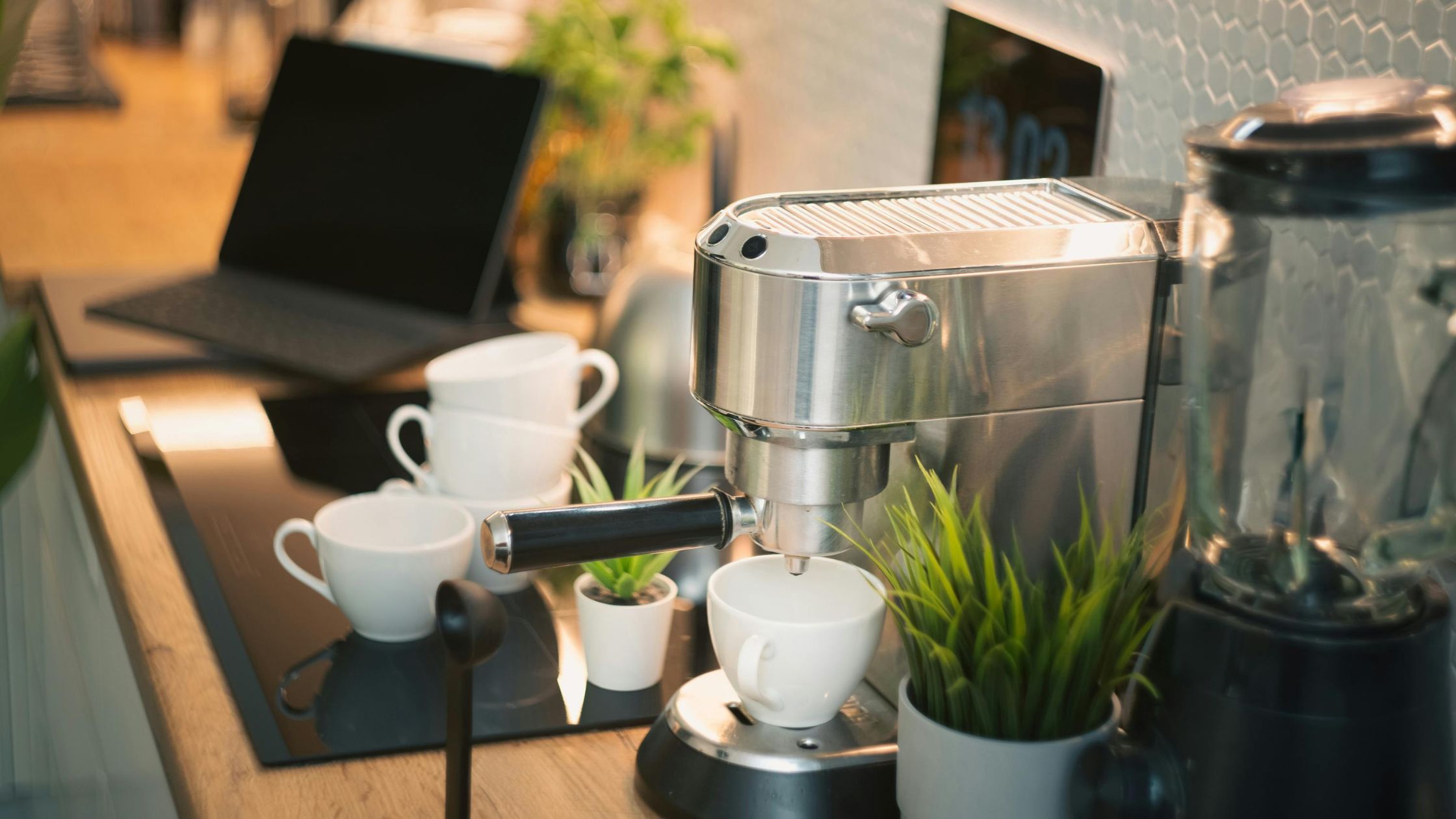
4. Address the Coffee + Sugar Cycle
This is one of the most common patterns I see across every workplace.
Coffee becomes the solution to fatigue, and sugar becomes the quick add-on. The short-term lift is followed by an inevitable crash, which leads to more caffeine or more snacking later in the day.
When teams understand this pattern and are given simple alternatives, like pairing coffee with something more substantial, the shift is noticeable, particularly in afternoon energy and focus.
What Changes When This Is Done Well
When the kitchen environment supports better choices, the shift is subtle but consistent.
Teams report:
- More stable energy across the day
- Fewer afternoon crashes
- Less reliance on constant caffeine and sugar
- Improved focus and productivity
More importantly, these changes don’t rely on motivation. They happen because the environment is doing part of the work.
Why This Approach Works (When Others Don’t)
Most workplace wellbeing strategies focus on education.
But information alone doesn’t change behaviour, especially in high-pressure, time-poor environments.
What works is:
- Reducing decision fatigue
- Making better choices easier
- Creating systems that support consistency
This is why practical workshops and environment-focused strategies consistently outperform purely educational approaches. Staff don’t need more information, they need something that fits into real life.
If You’re Looking to Improve Staff Wellbeing Without Adding More Overwhelm
This is exactly the focus of the work I do with organisations.
Not more rules or complexity. Just practical strategies that translate into daily habits.
Through workshops and ongoing support, the goal is to create changes that are simple enough to stick—and meaningful enough to make a difference.
If you’re looking to improve staff energy, focus, and wellbeing in a way that actually lasts, this is where to start.
👉 Get in touch to explore workshops or workplace wellbeing support tailored to your team.

Jade Harman is a Clinical Nutritionist, educator, and speaker helping people make sense of nutrition. With a Bachelor’s degree in Nutritional and Dietetic Medicine and experience supporting more than 500 clients, she’s seen firsthand how misinformation can derail good habits. Jade doesn’t do fads or guilt – just practical advice that works in real life with real people. You can find out more about Jade here.




+ show Comments
- Hide Comments
add a comment